Post by

In recent years, many businesses moved online or at least expanded their reach into the web world. People rely on websites like never before for all aspects of their lives. With the increased importance of the digital world, more attention is being paid to the web standards and protocols. One of the most important aspects of any website today is its accessibility. Web accessibility means that websites, tools, and technologies are designed and developed so that people with disabilities can use them.
People navigate the web in a variety of ways. Most people use a computer mouse or tap away at their mobile device screen. People who are blind may use screen readers, which are devices or software that reads out loud the text that appears on a screen. People who are deaf or hard of hearing may use captioning. And people whose disabilities affect their ability to use a mouse may use a keyboard or voice recognition software to control their computers and other devices with verbal commands.
How Can Accessibility Benefit Your Website?
- Grow your audience– By being inclusive, you naturally grow your audience by welcoming people that otherwise would not be able to use your product.
- Appeal to search engines– Search engines crawling techniques keep evolving and more attention is being paid to the accessibility compliance.
- Enhance your public image– Accessibility is critical for businesses that want to create high-quality and modern websites that welcome all people to use their products and services. Accessible design improves overall user experience and satisfaction across different devices, especially for older users.
- Avoid lawsuits– Hundreds of brands have been hit with significant lawsuits in recent years. Making necessary changes to your website will help you avoid the legal cost of being found non-compliant with the ADA.
What are the Ways to Make a Website ADA Compliant?
- Design and develop with accessibility in mind
- Perform a series of tests on an already developed website to pinpoint weaknesses and fix issues
- Use a 3rd party accessibility widget. It’s an on-page widget provides control of font styles and additional tools for those that require them to navigate a website with ease. Generally speaking, there are two types of accessibility widgets: basic and premium.
- Basic ADA widget
- Provides control of basic font styles
- Example of a website that is using a basic accessibility widget: https://agmsolutions.com
Example of a basic accessibility widget
- Premium ADA widget
- The AI-powered on-page widget allows people with different disabilities to customize their browsing experience for their particular needs.
- Fully customizable to match your brand colors.
- AI technology provides ongoing support by scanning for content changes and remediating every 24 hours.
- Widget developer provides a litigation support package if someone ever questions your website’s accessibility.
- *Requires a monthly fee and annual commitment.
- Example of a website that it is using a premium accessibility widget: https://floorplangurus.com.
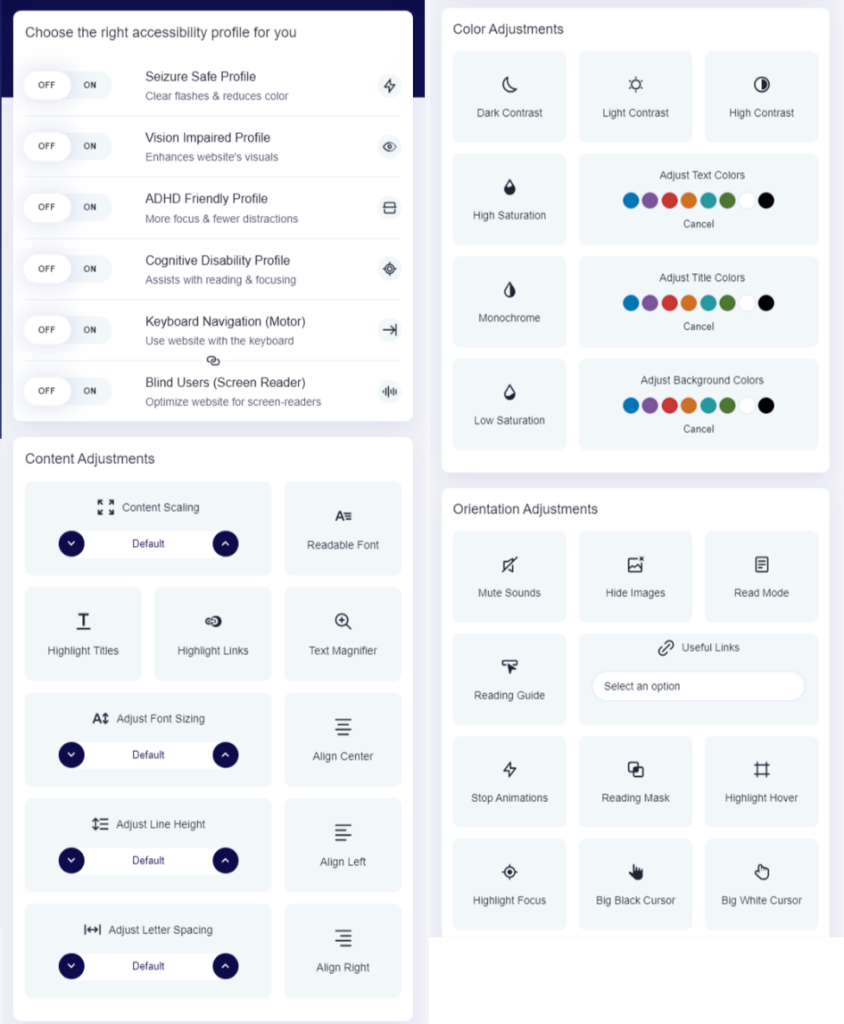
Example of a premium accessibility widget
Conclusion
Web Accessibility is not a trend, but a necessity. With the increase of lawsuits happening across the country, get your business protected by ensuring that your website is welcoming and inclusive for all people.